Stand-up paddleboarding is one of the fastest-growing water activities in Ontario cottage country, combining a full-body workout with an unmatched view of the lake surface. This guide covers the best SUP lakes, beginner tips, what to look for in a rental property, and how to make the most of paddling time at your Ontario cottage.
Why Is Stand-Up Paddleboarding the Perfect Ontario Cottage Activity?
Stand-up paddleboarding sits at the intersection of accessibility and reward. It requires no engine, no licence, and minimal gear. A beginner can stand and paddle in calm water within 20 minutes of trying for the first time. An experienced paddler can cross several kilometres of open water, explore island chains, or navigate river systems before breakfast. The standing position gives paddlers a perspective on the lake that neither a boat nor a kayak provides: a clear view down into the water, across the surface, and toward the treeline at eye level.
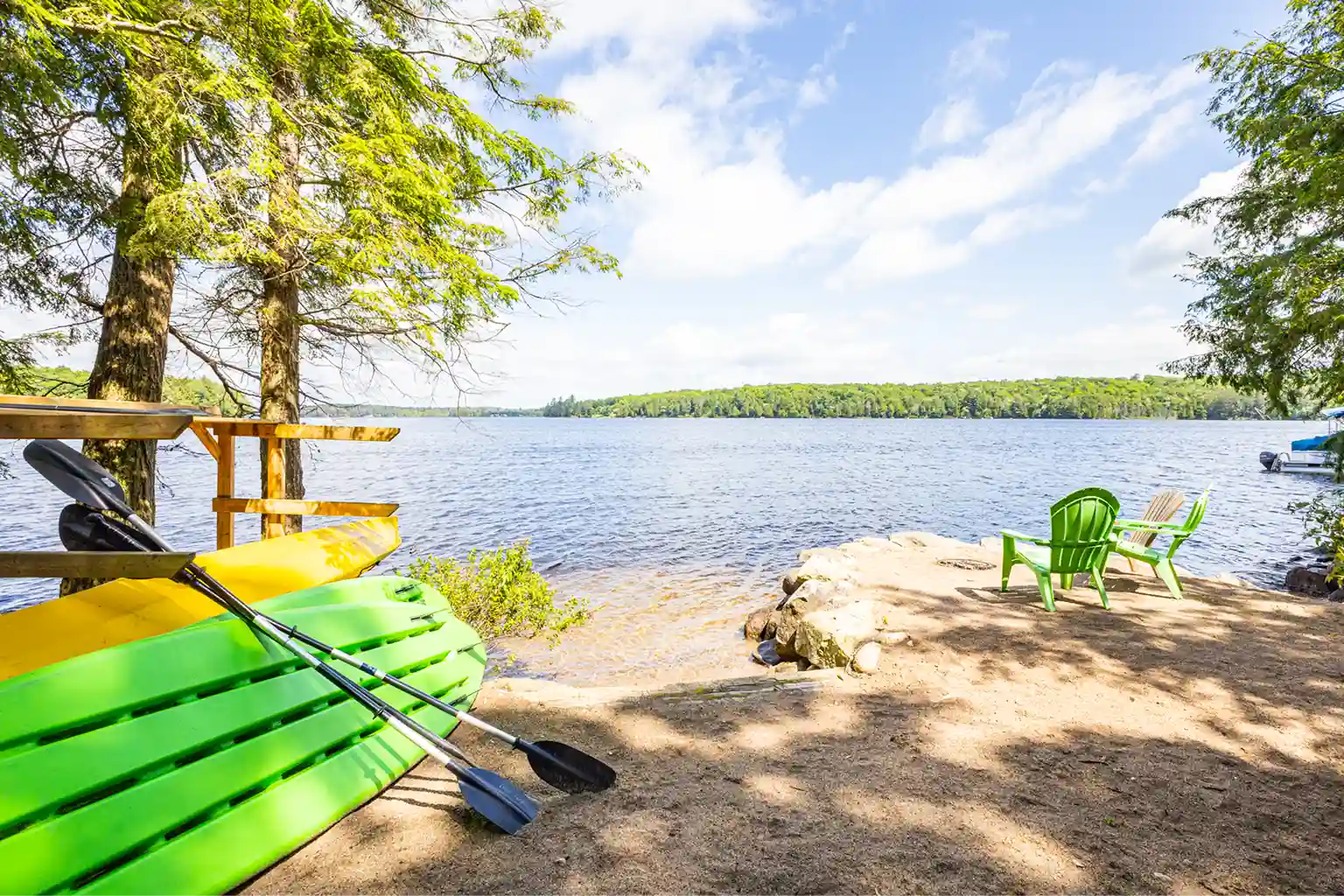
Ontario cottage country provides the ideal environment for SUP. The Canadian Shield lakes of Muskoka, Haliburton, and the Kawarthas offer clear, calm water in protected bays, with visual depth that makes the paddling experience genuinely spectacular. Many waterfront properties managed by Cottage Vacations include stand-up paddleboards as standard amenities, removing the cost and logistics of renting or transporting a board from the city.
What Are the Best Lakes for Paddleboarding in Ontario Cottage Country?
Not all Ontario cottage country lakes are equally suited to stand-up paddleboarding. Wind exposure, motorboat traffic, water clarity, and bay configuration all affect the paddling experience.
Lake Rosseau, Muskoka
Lake Rosseau is one of the three main Muskoka lakes and consistently the most visually striking for paddlers. Its deep, clear water, granite shorelines, and sheltered eastern bays make it ideal for both beginner stand-up paddleboarders and experienced paddlers who want a longer circuit. The eastern bays near Windermere remain calm for SUP even when wind picks up on the main lake. Properties available through Cottage Vacations in Muskoka on Lake Rosseau often include paddleboards and have gradual shoreline entry points well suited to families.
Lake Joseph, Muskoka
Lake Joseph is the least commercially developed of the three main Muskoka lakes. Its narrow bays and island clusters create natural wind sheltering. The lake has noticeably lighter motorboat traffic than Lake Muskoka or Rosseau, which makes paddleboarding more relaxed throughout the day. Several islands have sandy beaches suitable for a mid-paddle rest.
Stoney Lake, Kawarthas
Stoney Lake in the Kawarthas is famous for its maze of small islands and connecting channels that reward unhurried exploration. A paddler can spend three to four hours on Stoney Lake without repeating any section of shoreline. The Canadian Shield structure of the lake produces exceptional water clarity that makes SUP particularly rewarding. Explore Kawartha Lakes cottage rentals with dock access and included paddleboards through Cottage Vacations.
Kawagama Lake, Haliburton
Kawagama Lake is Haliburton’s largest lake and one of the least developed. More than 80 percent of its shoreline has no cottage development, which means a full paddling day feels genuinely remote even when the rental property is only minutes away by road. The absence of motorboat traffic in most bays makes Kawagama one of the most peaceful paddleboarding lakes in the region.
Oxtongue River, Algonquin Area
For paddlers who want a river experience, the Oxtongue River near Algonquin’s West Gate offers a manageable downstream route through open wetland before entering the Canadian Shield river system. Algonquin Outfitters operates a base on Oxtongue Lake that provides SUP and kayak rentals. The Ragged Falls day trip from Oxtongue Lake is one of the most popular paddling routes in all of Ontario cottage country.
What Do Beginners Need to Know Before Stand-Up Paddleboarding at a Cottage?
Stand-up paddleboarding has a short learning curve on calm water but requires attention to a few fundamentals before the first session.
Start on Your Knees
New paddlers should begin each session on their knees rather than standing immediately. Paddling from a kneeling position builds familiarity with the board’s response to weight shifts and paddle strokes before adding the complexity of standing balance. Most beginners are ready to stand after 10 to 15 minutes of kneeling paddle time.
Position Your Feet Correctly
Stand with feet parallel to each other, shoulder-width apart, centred over the middle of the board. Avoid standing near the nose or tail. Keep knees slightly bent to absorb small chop. Look at the horizon rather than at the board surface. Staring at the board while standing causes the balance instability it is trying to correct.
Use the Paddle Correctly
The paddle blade faces away from the paddler, not toward them. This is the single most common beginner error. The bent portion of the shaft faces down and away from the paddler. Use a top hand on the T-grip and a lower hand on the shaft, alternating sides every four to six strokes to maintain a straight line.
Choose Calm Conditions
Wind and chop make stand-up paddleboarding significantly harder for beginners. The first sessions should be on protected bays in calm morning conditions before wind builds on the main lake. Wind picks up on most Ontario cottage country lakes between 10 a.m. and 2 p.m. in summer. Early morning paddling produces the flattest water and the best wildlife sightings. Review the Cottage Vacations packing guide for gear recommendations including board leashes and PFDs.
Wear a Leash and Carry a PFD
Transport Canada requires that a personal flotation device be carried on any paddleboard used on Canadian waterways. It does not need to be worn but must be accessible on the board. A board leash attaches to the ankle and keeps the board within reach if a paddler falls. Both are standard safety equipment for SUP on Ontario cottage country lakes. Parks Canada also publishes a short summary of SUP safety requirements worth reviewing before your first lakes.
What Type of Paddleboard Works Best at an Ontario Cottage?
For cottage rental use, inflatable stand-up paddleboards are the practical standard. Inflatable SUPs are stored deflated in a bag, travel easily in any vehicle, and are more forgiving in falls than rigid boards. They perform comparably to rigid boards in flat to moderate water conditions and are suitable for beginner to intermediate paddlers.
Rigid boards offer marginally better performance in straight-line tracking and speed, but require roof racks and significantly more storage space. Most waterfront cottage properties with included paddleboards use inflatable models for these reasons. When choosing a Cottage Vacations property that includes paddleboards, confirm the board size: boards between 10 and 11 feet are the most stable and best suited to most adult paddlers and families.
When Is the Best Time of Year to Paddleboard at an Ontario Cottage?
Summer, from late June through Labour Day, is peak paddleboarding season on Ontario cottage country lakes. Water temperatures are comfortable, mornings are calm, and the long days give paddlers extended time on the water. Summer availability fills quickly at the best waterfront properties. Booking in late winter or early spring for summer dates is strongly recommended.
Late spring and early fall offer exceptional paddleboarding conditions with fewer motorboats and lower rates. September in particular produces calm, clear mornings with dramatically reduced lake traffic. Fall availability at Cottage Vacations opens up excellent waterfront properties at off-peak rates, often with better access to secluded paddling areas.
Paddle Out and Make the Most of Your Ontario Cottage Waterfront
Stand-up paddleboarding transforms a waterfront cottage from a place to sit and look at the lake into a platform for active exploration. The combination of Ontario’s clear Canadian Shield lakes, the accessibility of modern inflatable boards, and the waterfront properties available through Cottage Vacations across Muskoka, Haliburton, and the Kawarthas makes this one of the most rewarding activities in the region.
Find Your Ontario Cottage With Paddleboards Included
Browse Ontario waterfront properties with included SUPs, private docks, and calm-water bays across all cottage country regions at Cottage Vacations.
Frequently Asked Questions
1. Do Ontario cottage rentals include stand-up paddleboards?
Many Ontario cottage rentals managed by Cottage Vacations include stand-up paddleboards as standard amenities. Amenity details are listed clearly for every managed property on the platform. To find properties with included paddleboards, browse all cottages and filter by watercraft amenities, or contact the Cottage Vacations team directly for a shortlist by region.
2. Is stand-up paddleboarding difficult to learn at a cottage?
Stand-up paddleboarding is one of the most accessible water sports for beginners. On calm water in a protected bay, most first-time paddlers can stand and paddle within 20 minutes of their first attempt. Starting on your knees, positioning feet correctly over the board centre, and choosing calm morning conditions make the learning process straightforward for adults and teenagers. When you rent a cottage with direct waterfront access and sheltered bay conditions, learning becomes easier and more enjoyable for all ages.
3. Do you need a PFD to paddleboard on Ontario cottage country lakes?
Transport Canada requires that a personal flotation device be carried on any paddleboard used on Canadian navigable waterways. The PFD does not need to be worn but must be accessible on the board at all times. A board leash attached to the ankle is also strongly recommended. Both items are standard safety equipment for stand-up paddleboarding in Ontario. Add both to your packing guide list before heading out on the water.
4. What are the best lakes for paddleboarding near Toronto?
The closest Ontario cottage country lakes for paddleboarding from Toronto are in the Kawarthas, approximately 90 minutes northeast via Highway 115. Stoney Lake, Pigeon Lake, and Sturgeon Lake are all excellent SUP destinations with calm bays and clear water. Muskoka lakes including Lake Joseph and Lake Rosseau are about two hours north and offer exceptional clarity and scenery for more experienced paddlers.
5. When is the best time to paddleboard in Ontario cottage country?
Early morning between 6 and 9 a.m. is the best time to paddleboard on most Ontario cottage country lakes, when surface conditions are flattest and motorboat traffic is lowest. The peak season is late June through Labour Day. Late May and early June offer excellent conditions with minimal boat traffic. September paddling produces some of the most spectacular autumn foliage as a backdrop and reliably calm mornings. To plan your trip around peak conditions, browse by month to match your booking with the best paddling windows of the season.
Key Takeaways
- Stand-up paddleboarding is one of the most accessible and rewarding activities at an Ontario cottage, requiring no engine, no licence, and as little as 20 minutes to learn for beginners.
- Lake Rosseau and Lake Joseph in Muskoka, Stoney Lake in the Kawarthas, and Kawagama Lake in Haliburton are among the best SUP lakes in Ontario cottage country.
- Beginners should start on their knees, position feet over the board centre, paddle in calm morning conditions, and always carry a PFD.
- Inflatable stand-up paddleboards are the practical standard for cottage use: they store easily, travel without roof racks, and perform well in flat to moderate conditions.
- Early morning summer paddling and September fall-season sessions offer the flattest water and lowest motorboat traffic on most Ontario cottage country lakes.