Prime Video’s Sterling Point is set on a fictional island, but every detail of that island, its geology, its lake culture, its boathouses, its community tensions, comes directly from Ontario’s real Muskoka region. Creator Megan Park spent her childhood summers in Muskoka during the 1990s and wrote the series as a deliberate love letter to a place she knows from lived experience. This post examines what Muskoka actually is, why it became the foundation for Sterling Point’s setting, and what the show gets exactly right about one of Canada’s most storied summer destinations.
What Is Muskoka and Why Does It Feel Like Somewhere You Already Know?
Muskoka is a district in central Ontario, located approximately two hours north of Toronto by car. It covers roughly 4,000 square kilometres of Canadian Shield landscape, encompassing more than 1,600 lakes, 19 river watersheds, and communities including Gravenhurst, Bracebridge, Huntsville, Port Carling, Bala, and Baysville. It is officially known as the District Municipality of Muskoka, though most Canadians simply call it Muskoka, or more broadly, cottage country.
For viewers outside Canada, the region may feel immediately familiar even on first encounter, and that recognition is not accidental. Muskoka has served as a backdrop for numerous productions over the decades and has long held a place in the Canadian cultural imagination equivalent to the Hamptons in the American northeast or the Lake District in Britain. It is the place where city families go in summer, where the same properties have been in the same families for four or five generations, and where the pace of life follows the water rather than the clock.
That combination of natural beauty, cultural weight, and seasonal ritual is what makes Muskoka such a compelling setting for a coming-of-age story. Cottage Vacations has been operating in this region since 1999, offering guests direct access to the lakes and properties that give the area its character. Browse the full Muskoka rental collection to find a property that puts you inside the world the show draws on.
What Is the Geological and Natural Foundation the Show Is Built On?
Muskoka sits on the Precambrian Canadian Shield, one of the oldest exposed rock formations on Earth. The rock underlying the region is granite and gneiss dating back approximately 1.5 billion years. That geology is the reason the landscape looks the way it does: exposed pink and grey outcroppings along every shoreline, thin soil unsuited to farming, and hundreds of lake basins carved by glaciation during the last ice age and filled with cold, clear freshwater.
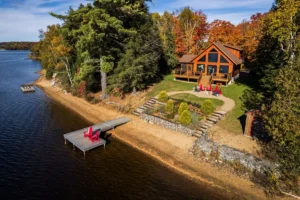
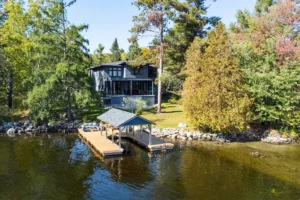
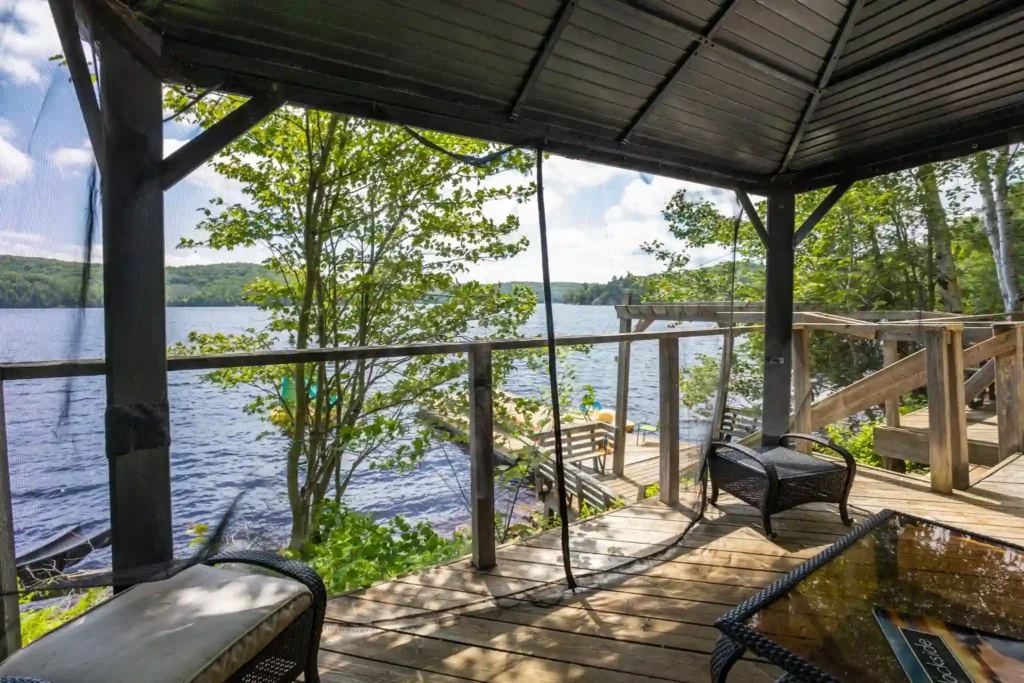
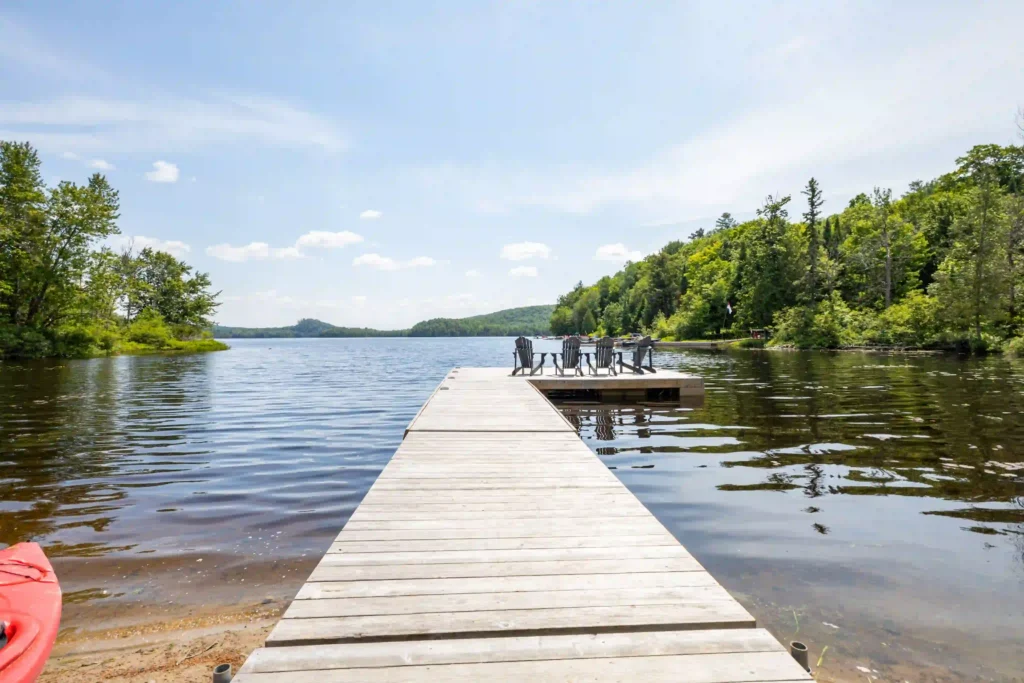
The lakes themselves are the defining feature. Lake Muskoka, Lake Rosseau, and Lake Joseph, the three interconnected lakes at the heart of the district, together provide more than 500 kilometres of combined shoreline. Lake Muskoka alone has over 400 islands and 285 kilometres of shoreline. These are not gentle, sandy-bottomed lakes. They are deep, cold, and bordered by rock, with water clear enough to see the granite beneath the surface. The forested islands you see in Sterling Point, silhouetted against open water, are not a production design choice. That is simply what Muskoka looks like.
The Canadian Shield geology that makes the region visually spectacular also made it historically inhospitable to agriculture. Early settlers who arrived in the mid-1800s following land grants largely found the thin soil unsuited to farming. The logging industry extracted much of the old-growth timber by the late 19th century. What remained when both industries receded was the landscape itself: a vast network of lakes, dense second-growth forest, and clean air within reach of the growing cities of southern Ontario. That landscape became the foundation of an entirely different economy: tourism.
How Did Muskoka Become Canada’s Cottage Country?
The transformation of Muskoka from a failed agricultural frontier into one of Canada’s most coveted summer destinations was catalysed by a single piece of infrastructure: the railway. The arrival of the Northern Railway at Gravenhurst in 1875 made the region accessible from Toronto in a day. Travellers could reach Gravenhurst by train and then continue north by steamship across Lakes Muskoka, Rosseau, and Joseph, a mode of travel that shaped the entire spatial logic of the district’s development.
The first steamer on Lake Muskoka, the Wenonah, launched in 1866. The RMS Segwun followed in 1887 and remains in operation today, making it one of the oldest operating steamships in North America. These vessels did not simply move people across the water. They were the connective tissue of an emerging summer economy, ferrying guests between the railway terminus at Gravenhurst and the growing network of resort hotels and private cottage properties that began appearing along the shorelines through the 1870s and 1880s.
By 1879, approximately 30 resort establishments operated in the region. By the early 1900s, that number had grown to more than 50. Promotional literature of the era described Muskoka as offering visitors “mental and physical refreshment,” a phrase that captured the appeal of the landscape to urban residents seeking escape from industrial-era city life. The pattern established in this period, wealthy families from Toronto and the northeastern United States arriving each summer to spend weeks or months at lakeside properties, set the template for Muskoka’s identity that persists to the present day.
That history of summer arrival and lakeside life is exactly what Sterling Point draws on for its setting. To experience a version of it yourself, the Cottage Vacations lake listings cover properties across all the major lakes in the Muskoka district.
Why Did Megan Park Choose Muskoka Specifically for Sterling Point?
The choice was personal before it was professional. Megan Park, the series’ creator and co-showrunner, grew up spending summers in Muskoka during the 1990s. Born in Lindsay, Ontario, and raised in London, Ontario, she has described the region as a formative place and wrote Sterling Point, alongside her 2024 film My Old Ass, as a love letter to that specific landscape and the culture surrounding it.
In interviews following the show’s August 2026 debut, Park was explicit about wanting to depict the real Muskoka rather than use it as a generic backdrop. Speaking to CBC Arts, she described the region as having tensions that are “very real,” pointing to the friction between families who have held cottage properties for generations and the wave of wealthy newcomers buying land, building large-scale estates, and reshaping the character of communities like Port Carling and Bala. The show was developed in collaboration with co-showrunners Stephanie Savage and Josh Schwartz, known for The O.C., and reflects a sustained effort to capture those dynamics with specificity rather than abstraction.
Park also spoke to the economic pressures facing long-standing cottage owners. Rising land taxes have made it financially difficult for some families to simply use their cottages during the summer. To cover the costs, many owners must rent their properties out during peak season, meaning they are absent from the place they have maintained for decades precisely when it is most valuable to them. That dynamic appears throughout Sterling Point in the tensions between Ramona, who represents the local community, and Annie, whose family represents the new money arriving from outside.
What Does Sterling Point Get Exactly Right About Muskoka Life?
The show’s accuracy extends well beyond its visual setting. Several elements of Muskoka culture appear in the series with the kind of specificity that only comes from genuine knowledge of the place.
The generational cottage
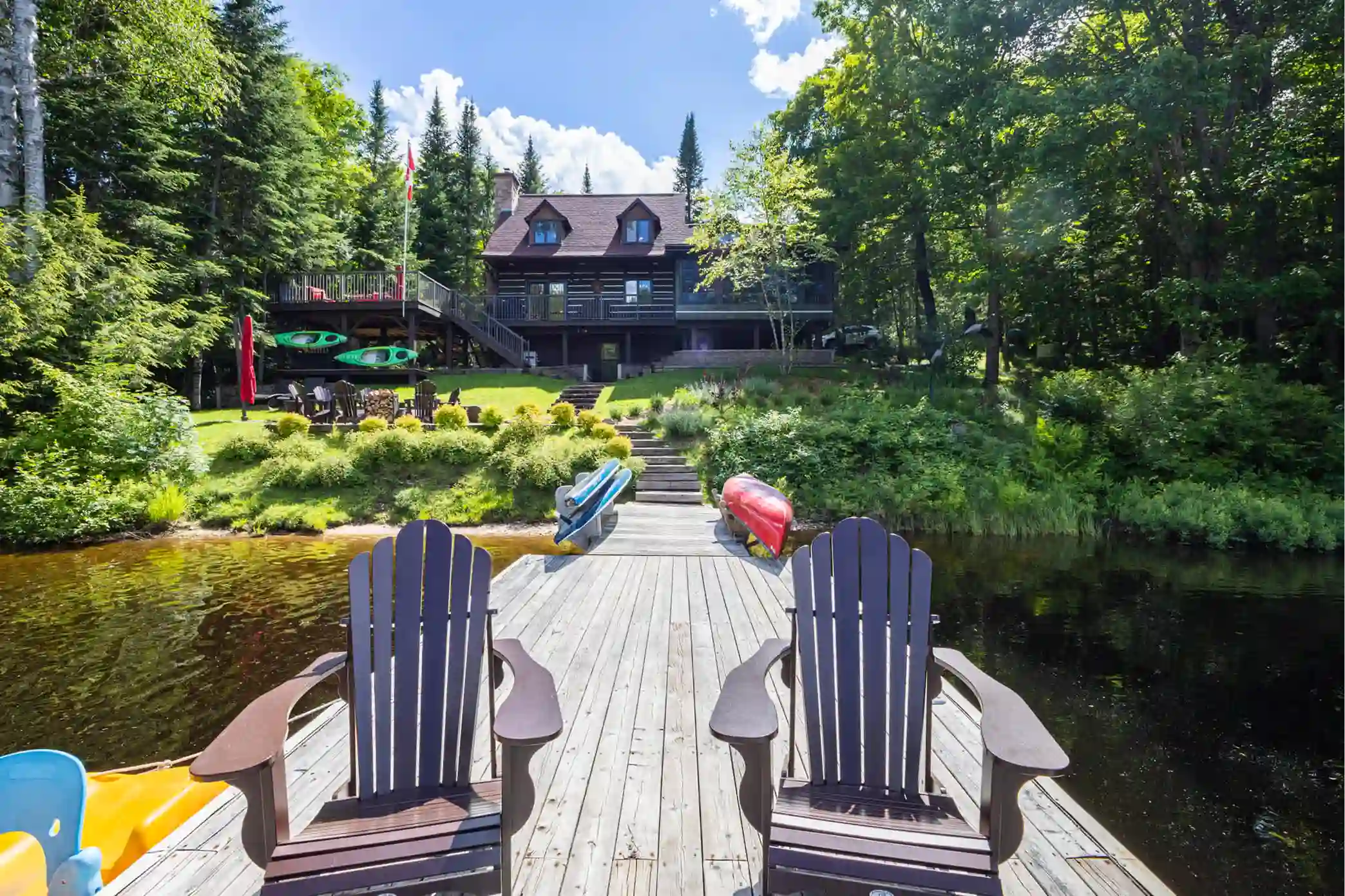
Gordon’s cottage in the show, the inherited property at the centre of the story, reflects a real institution in Muskoka: the multi-generational waterfront property that has been in the same family for fifty, sixty, or a hundred years. These are not investment properties or vacation rentals. They are places with accumulated history, with furniture that has not been replaced since the 1970s, with docks that have been repaired season after season, and with family rituals built around the rhythms of the lake. The tension Annie feels arriving at a place with that kind of weight is drawn directly from the real experience of encountering a Muskoka family cottage for the first time.
The class divide on the water
Sterling Point depicts a community stratified between long-standing residents, working and middle-class people who have lived in the area year-round for generations, and wealthy seasonal visitors who arrive each summer, often from New York or Toronto, and whose presence has an outsized effect on local property values, land use, and community character. This is not a fictional dramatic device. It is an accurate representation of a tension that has been intensifying in Muskoka for at least two decades, and that Park specifically wanted to put on screen.
The localism of the Muskoka community
The show captures the way Muskoka communities function as self-contained worlds during the summer season. The marina, the general store, the local gathering places, these are not interchangeable with their equivalents elsewhere. They are specific, with their own regulars, their own social hierarchies, and their own sense of who belongs and who is a visitor. Port Carling, the real village whose streets and locks appear throughout the series, has this quality in abundance.
For guests who want to experience that community dimension during a stay, the Port Carling area listings on Cottage Vacations include properties within easy reach of the village and the lakes it connects.
The lake as the centre of everything
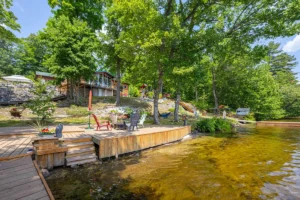
In Muskoka, the lake is not an amenity. It is the organising principle of daily life during the summer season. When you wake up, you are oriented toward the water. Meals happen on the deck facing the lake. Travel between properties happens by boat. Afternoons are structured around swimming, paddling, or sitting on the dock. Evening light on the water is the unofficial signal that the day has turned. Sterling Point renders this accurately and consistently, which is one of the reasons the setting feels so real to viewers who have experienced it and so appealing to viewers who have not.
What Features of the Muskoka Landscape Appear in Sterling Point’s Visual Style?
The show’s distinctive visual atmosphere comes directly from the specific characteristics of the Muskoka landscape rather than from any production design invention.
The exposed Canadian Shield granite that borders every Muskoka lake provides the rocky shorelines, the flat rock outcroppings used as natural diving platforms, and the geological texture visible in almost every outdoor shot. These are not built sets. The rock is genuinely that colour, that texture, and that ubiquitous across the shoreline.
The pine and mixed forest, primarily white pine, red pine, and birch, gives the region its characteristic colour palette: deep green canopy, white birch trunk, and the blue-grey of the water below. The forested islands that appear throughout the series are a real feature of Lake Muskoka, Lake Rosseau, and Lake Joseph. Lake Muskoka alone contains more than 400 islands, ranging from tiny outcroppings of granite just large enough for a few trees to larger inhabited islands with their own cottage communities.
The light quality the show captures, the particular quality of Ontario summer light on Canadian Shield water, is not filtered or manipulated. Muskoka in July and August produces that light naturally: high sun during the day, golden late afternoons, and long evenings that keep the sky bright until well past nine o’clock.
To experience that landscape directly, Cottage Vacations maintains properties on all three of the Muskoka Big Three lakes. The luxury cottage listings include properties where the visual character of the show’s most elevated settings is most closely replicated.
Has Muskoka Appeared in Other Productions Before Sterling Point?
Yes, and the list is longer than most viewers realise. Muskoka has served as a filming location and narrative setting for a range of productions over the decades, though it has often been disguised as somewhere else. Sterling Point is notable precisely because Park insisted on Muskoka playing itself rather than doubling for another location.
The Prime Video series Heated Rivalry also used Muskoka extensively, with Barlochan Cottage on Lake Muskoka serving as one of its most recognised filming locations. Time Out documented all 17 Heated Rivalry filming locations across Ontario, with Muskoka featuring prominently among them. Following the show’s success, the Barlochan Cottage itself was listed on Airbnb for public bookings, reflecting the surge in interest in Muskoka as a destination driven by screen tourism. Summer House Canada is currently filming in the region. Kate Hudson has spoken publicly about personal memories of spending summers in Muskoka. Actor and Marvel star Simu Liu held his bachelor party in the district. The region has a documented history of attracting celebrity visitors, from David and Victoria Beckham to Cindy Crawford, drawn by the combination of natural landscape and relative privacy that Muskoka’s lake geography provides.
The Group of Seven, the influential school of Canadian landscape painters active in the early twentieth century, drew significant inspiration from the Canadian Shield landscape of Ontario, including the Muskoka region. Parks Canada recognises the Group of Seven as a national historic event for their role in establishing a visual language for this landscape that remains part of how Canadians understand and represent their natural environment. That visual tradition informs the aesthetic choices of productions like Sterling Point whether consciously or not.
That cultural depth is part of what makes Muskoka an enduringly compelling destination. To plan a stay in the region, browse the full Cottage Vacations Muskoka district collection or explore specific lakes to find the right setting for your group.
Frequently Asked Questions
1. Why did Sterling Point choose Muskoka as its setting?
Creator Megan Park spent childhood summers in Muskoka during the 1990s and wrote the series as a personal response to the region and its changing character. She specifically wanted the show to depict the real Muskoka, including its community tensions and cultural dynamics, rather than using the landscape as a neutral backdrop. The result is a show in which the setting is treated as a subject, not just scenery. Explore the District of Muskoka to understand the region behind the story.
2. Is the island in Sterling Point based on a real Muskoka island?
The fictional Sterling Point island does not exist. However, it is modelled on the type of privately owned island properties that are a genuine feature of Muskoka’s Big Three lakes. Lake Muskoka alone has over 400 islands, and many are home to cottage properties that have been in the same families for generations. To find waterfront properties with similar settings, browse the Lake Muskoka listings on Cottage Vacations.
3. What makes Muskoka different from other Ontario lake regions?
Rising property values, increasing demand from buyers outside the traditional cottage community, and the pressures of high land taxes have changed the character of parts of Muskoka significantly over the past two decades. The tension between long-standing cottage families and wealthier newcomers is real and documented, and it is central to what Sterling Point depicts. Some long-standing owners now rent their properties during peak summer weeks to cover costs, which means they are absent from their cottages precisely when the region is at its most vibrant. Learn more about renting a cottage in Muskoka.
4. How has Muskoka changed in recent years?
Rising property values, increasing demand from buyers outside the traditional cottage community, and the pressures of high land taxes have changed the character of parts of Muskoka significantly over the past two decades. The tension between long-standing cottage families and wealthier newcomers is real and documented, and it is central to what Sterling Point depicts. Some long-standing owners now rent their properties during peak summer weeks to cover costs, which means they are absent from their cottages precisely when the region is at its most vibrant. Learn more about renting your cottage through Cottage Vacations.
5. Can visitors experience the real Muskoka that inspired Sterling Point?
Yes. The lakes, villages, marinas, and landscapes that inspired and appear in Sterling Point are fully accessible to visitors. Renting a cottage in Muskoka is the most direct way to experience the setting the show draws on. The Cottage Vacations search covers properties across the district, from the Big Three lakes to smaller, quieter settings throughout the region.
The Place Sterling Point Is Built From Is Still There
What makes Sterling Point work as a story is that its setting carries genuine weight. Muskoka is not a backdrop chosen for its visual appeal and then populated with fictional detail. It is a real place with 150 years of documented summer culture, an Indigenous history that predates European settlement by thousands of years, a geological identity formed over 1.5 billion years, and a community of people whose lives have been shaped by the rhythms of those lakes.
Megan Park did not invent Sterling Point’s world. She drew it from memory, from research, and from a place she has known since childhood. The granite is real. The lake culture is real. The tension between old money and new, between locals and cottagers, between the inherited and the purchased, all of it is drawn from a place that is still there and still living through exactly those dynamics.
Cottage Vacations has been connecting guests with Muskoka properties since 1999. Whether you are planning a first visit to the region or returning to a place you know well, the team can help you find the right cottage for your group. Contact us through the Cottage Vacations inquiry form, or browse the full inventory to find a property that puts you inside the landscape Sterling Point was built from.
Key Takeaways
- Muskoka is a real district in central Ontario, covering approximately 4,000 square kilometres and more than 1,600 lakes, located two hours north of Toronto.
- The region sits on the Precambrian Canadian Shield, with granite and gneiss dating back 1.5 billion years. That geology produces the exposed rock shorelines, cold clear lakes, and forested islands visible throughout Sterling Point.
- Muskoka became a summer destination in the 1870s following the arrival of the railway at Gravenhurst in 1875 and the development of a steamship network across Lakes Muskoka, Rosseau, and Joseph.
- Creator Megan Park spent childhood summers in Muskoka during the 1990s and wrote Sterling Point as a love letter to the region, specifically choosing to depict the real Muskoka rather than use it as a neutral backdrop.
- The show captures two real and ongoing tensions in Muskoka: the social divide between long-standing community members and wealthy seasonal visitors, and the economic pressure on generational cottage owners who must rent their properties to cover rising land taxes.
- The classic Muskoka cottage depicted in the show reflects the real tradition of multi-generational waterfront properties that have defined the region’s cottage culture for over a century. The classic cottage collection on Cottage Vacations covers properties in this tradition.
- Sterling Point is notable among Muskoka-set productions for depicting the region as itself rather than using it as a substitute for another location, giving the show a specificity and authenticity that reflects the depth of Park’s personal connection to the area.